
- Your cart is empty Browse Shop
Dragon Fruit Diseases in Karnataka: Symptoms, Prevention and Management
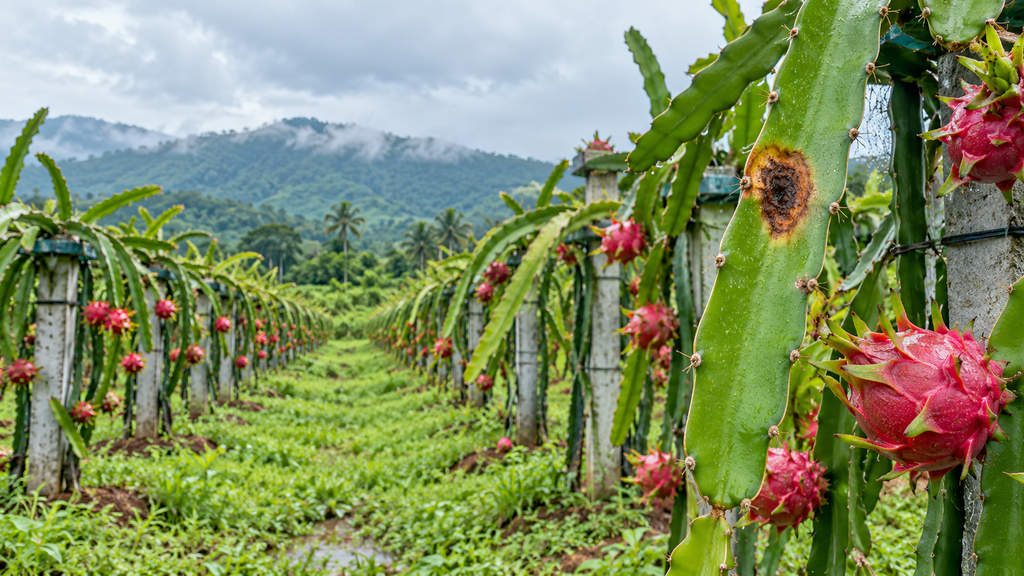
Dragon fruit crop in Karnataka: regular field inspection helps identify early symptoms before they spread.
Dragon fruit is a hardy crop, but it is not disease-proof. In Karnataka, the greatest crop losses usually begin after prolonged rain, poor field drainage, injuries on the stem, weak planting material or excessive irrigation. A small brown patch can quickly turn into stem rot and spread through a pole if it is ignored.
Early identification, field sanitation and water management are the most reliable ways to protect the crop. This guide helps farmers recognise the main disease and pest problems seen in dragon fruit and take the right first steps.
Important: Confirm the problem before spraying. Different diseases can look similar. For chemical control, use only products registered and recommended locally for the crop and problem, exactly as per the label and advice of the Department of Horticulture or a qualified plant-protection expert.
Why disease pressure increases in Karnataka
Disease risk is usually higher during the monsoon and in farms with poor airflow. The following conditions need attention:
- Water standing near poles or roots
- Dense, unpruned canopy with poor air movement
- Damaged stems from tying, pruning or harvesting
- Untreated tools used on infected plants
- Poor-quality or already infected planting material
- Excess nitrogen and irregular irrigation
- Sunburn or heat injury, which can create entry points for infections
1. Stem rot
Stem rot is one of the most serious problems in dragon fruit. It may be caused by fungal or bacterial organisms and becomes more common when the soil remains wet for long periods.
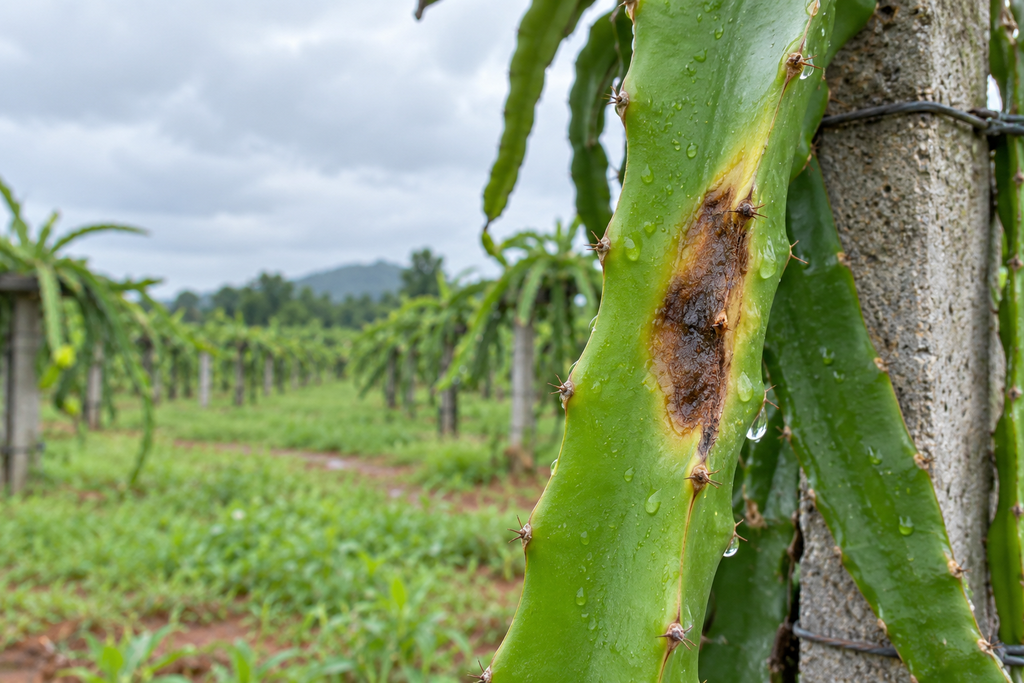
Stem rot usually starts as a wet or dark patch and can spread rapidly during rainy weather.
Symptoms
- Soft, water-soaked or dark brown patches on the stem
- Rot spreading from an injured area or lower part of the stem
- Yellowing, collapse or drying of affected branches
- Foul smell or watery ooze in some bacterial infections
What to do immediately
- Mark affected plants and stop moving from them to healthy plants without cleaning tools.
- Cut and remove infected portions with a disinfected tool, taking a margin of healthy tissue where practical.
- Destroy badly infected material away from the farm; do not leave it near poles or compost it untreated.
- Improve drainage immediately. Keep the basin around each pole free of standing water.
- Avoid overhead irrigation and avoid watering until the soil condition improves.
Prevention
Use well-drained land, keep raised planting zones where needed, prune crowded growth, and inspect the field after every heavy rainfall. Do not allow weeds or old infected stems to accumulate around the pole.
2. Anthracnose
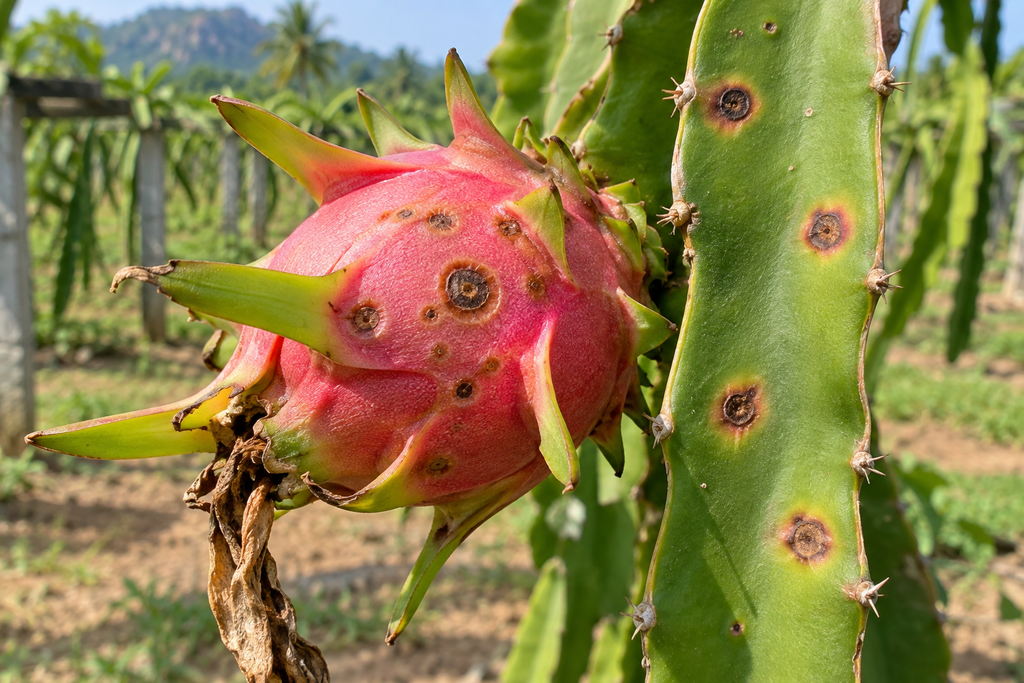
Anthracnose is a fungal disease that can affect stems and fruit. It often develops in humid conditions and can reduce the market value of fruit.
Symptoms
- Small reddish-brown to orange-brown spots on stems or fruit
- Circular or sunken lesions that gradually enlarge
- Dark pinhead-like fruiting bodies in older lesions
- Fruit blemishes and rot near harvest
Management approach
Remove infected stems and fruit promptly. Improve spacing and pruning so that rainwater dries quickly. Harvest carefully to avoid wounds on the fruit. Keep crates, knives and harvesting tools clean. Seek a local diagnosis for a suitable, label-approved fungicide programme where the disease is confirmed.
3. Bacterial soft rot
Bacterial soft rot may spread quickly after stem injury, sunburn or prolonged wet weather. It requires quick action because soft tissue can collapse rapidly.
Soft, water-soaked symptoms should be isolated quickly and the farm drainage checked immediately.
Symptoms
- Water-soaked, soft and mushy stem tissue
- Rapid enlargement of the affected area
- Watery discharge and an unpleasant smell in severe cases
- Collapse of a branch or an entire young plant
Prevention and control
Remove infected tissue without delay and disinfect cutting tools before moving to the next plant. Improve drainage and avoid wounds during pruning and tying. Protect plants from severe sunburn, because damaged skin can make infection more likely. Consult the local horticulture office for a crop-appropriate bacterial disease recommendation.
4. Brown spot and other fungal stem spots
Brown spot symptoms may appear as dark or corky patches on the stem. These diseases usually become worse when the canopy remains wet and poorly ventilated.
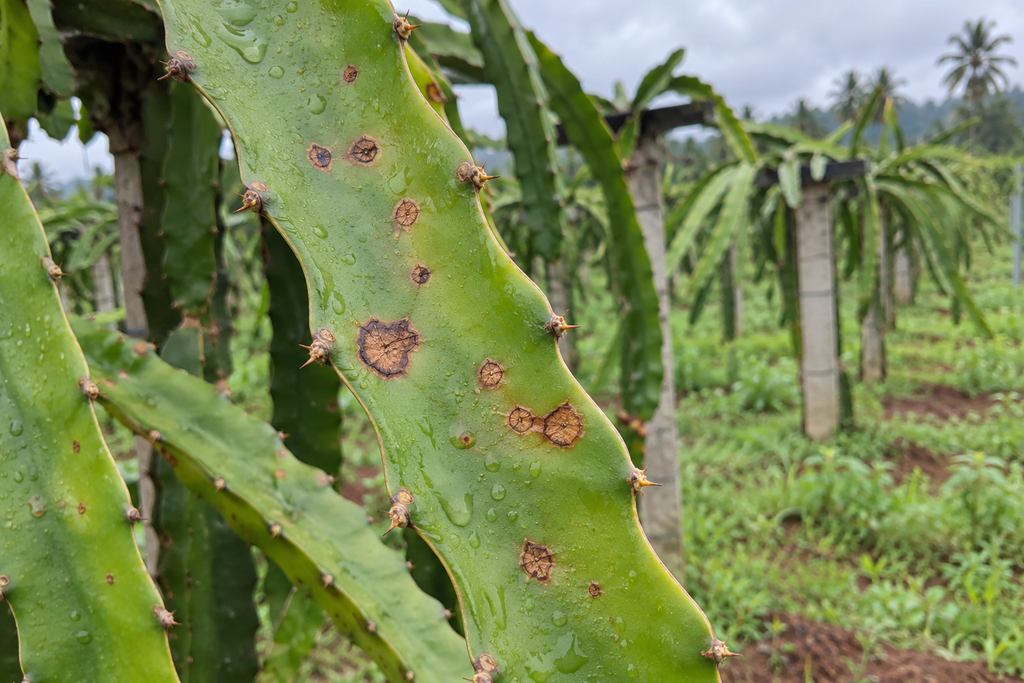
Dry brown or corky patches should be monitored and affected material removed before disease builds up in the field.
Symptoms
- Brown, black or grey spots on stems
- Spots may become dry, corky or slightly sunken
- Multiple lesions joining together on older stems
- Reduced vigour when infection is severe
Prevention
Prune weak and crowded branches, avoid overhead irrigation, and maintain a clean farm floor. Use healthy cuttings from known mother plants. Timely removal of affected stems prevents spores from building up in the field.
5. Fusarium wilt and root-zone problems
Wilt can occur when root health is affected by soil-borne pathogens, poor drainage or severe root injury. The exact cause should be confirmed before treatment.
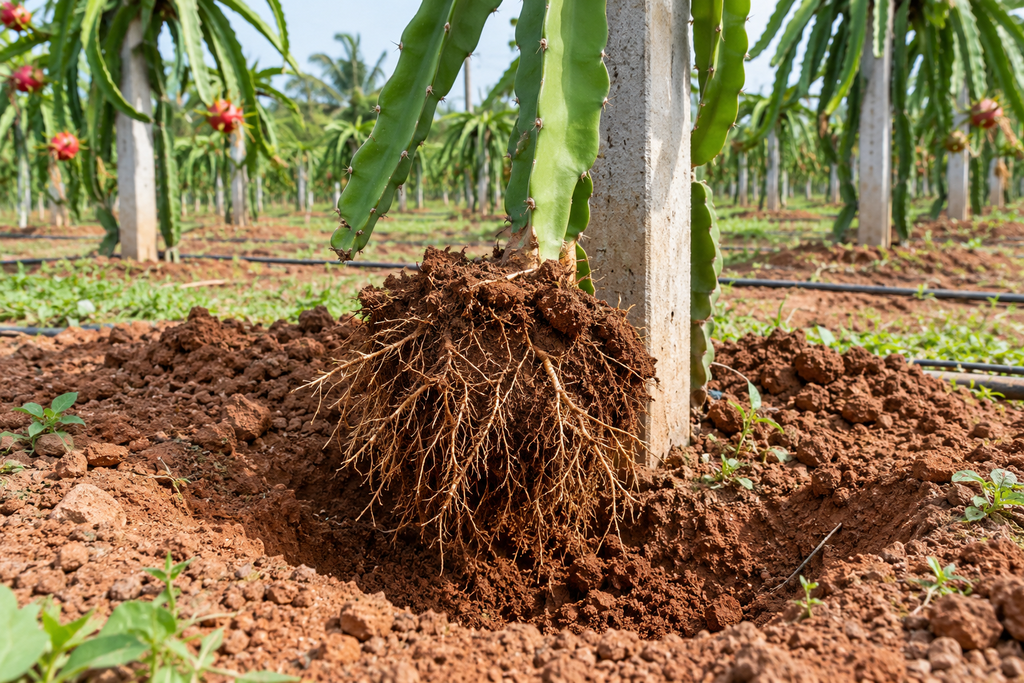
Inspect roots, soil condition and irrigation around declining plants before deciding on treatment.
Symptoms
- Loss of firmness and drooping of branches
- Gradual yellowing and drying without obvious surface rot initially
- Weak roots, root decay or discolouration near the base
- Patchy decline in areas with poor drainage
What farmers should check
Check whether water is collecting in one part of the farm, whether drippers are overwatering certain poles, and whether roots are damaged by soil compaction or pests. Soil drainage correction, healthy planting material and removal of severely affected plants are essential first steps.
6. Mealybugs, scale insects and ants
These are pests rather than diseases, but they weaken plants and can lead to secondary problems. Ants often protect mealybugs and scale insects, so both need attention.
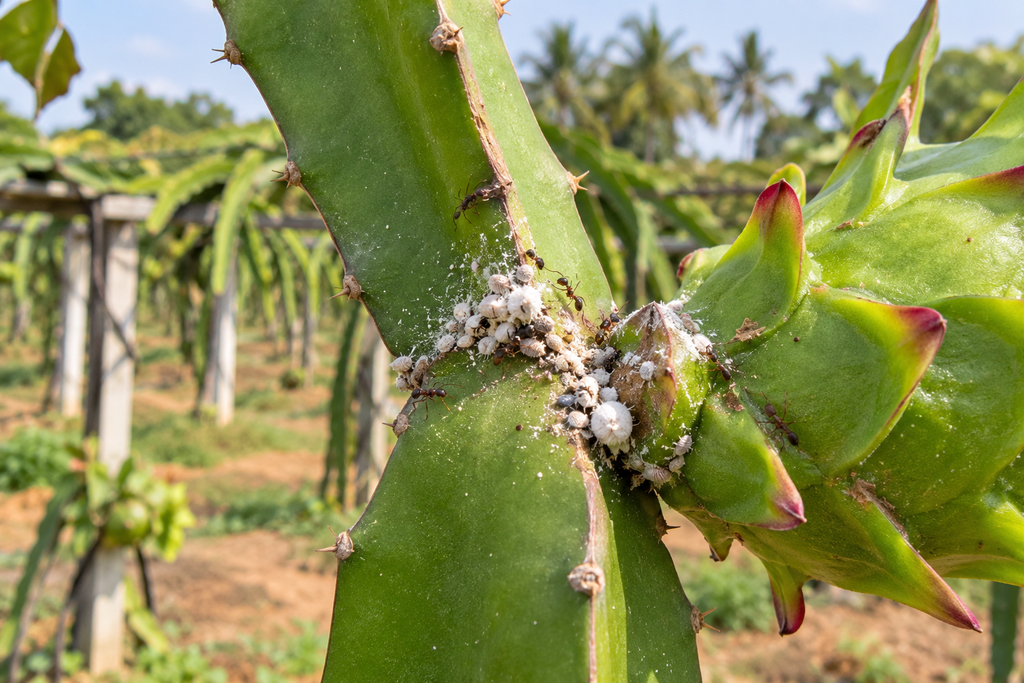
Inspect stem joints closely for white mealybug clusters and ant activity.
Symptoms
- White cotton-like clusters on stems, joints and fruit
- Sticky honeydew and black sooty mould
- Ant activity around stems and poles
- Stunted or weak new growth
Management approach
Inspect new flushes and hidden stem joints every week. Remove heavily infested plant parts where feasible. Control ants around poles, keep weeds down, and encourage beneficial insects. Use only locally recommended, label-approved pest-management products when infestation crosses an economic threshold.
7. Sunburn: not a disease, but a major risk
During hot periods, especially from March to May, exposed stems may turn yellow, pale or bleached. Severe heat and sun exposure can damage the stem surface and make plants more vulnerable to rot.
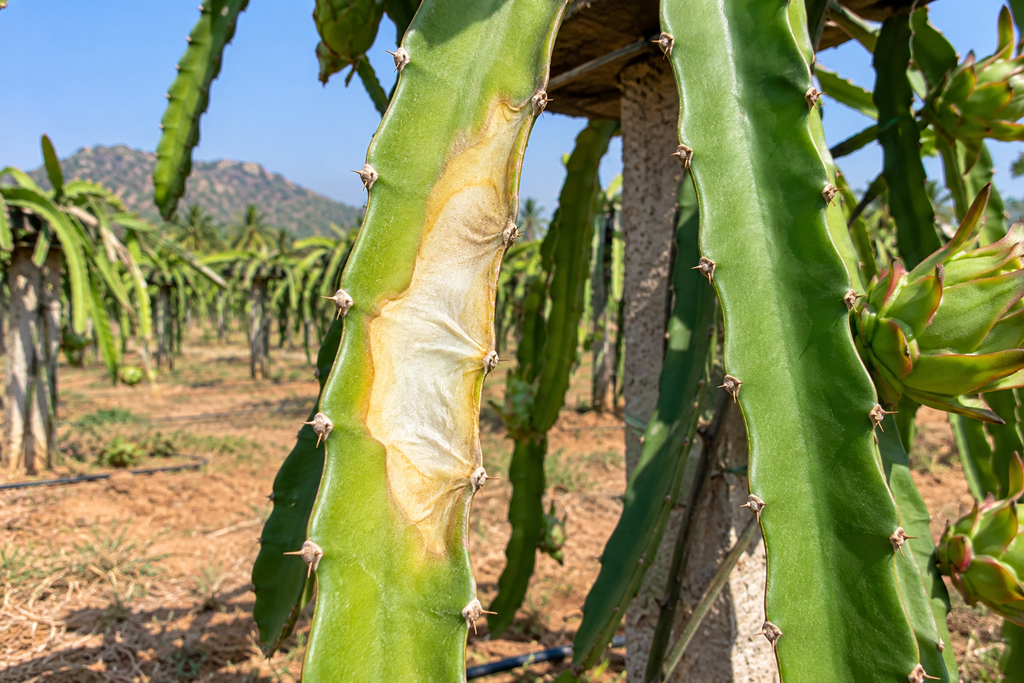
Sunburn looks dry and bleached, unlike a wet rot. It still needs early care because damaged tissue can invite infection.
Prevention
- Maintain a balanced canopy; do not over-prune before peak summer.
- Use locally suitable shade or heat-management practices in very exposed farms.
- Keep irrigation regular but do not overwater.
- Avoid pruning or applying sprays during the hottest part of the day.
A practical monsoon disease-prevention checklist
Before and during the monsoon, every dragon-fruit farmer should:
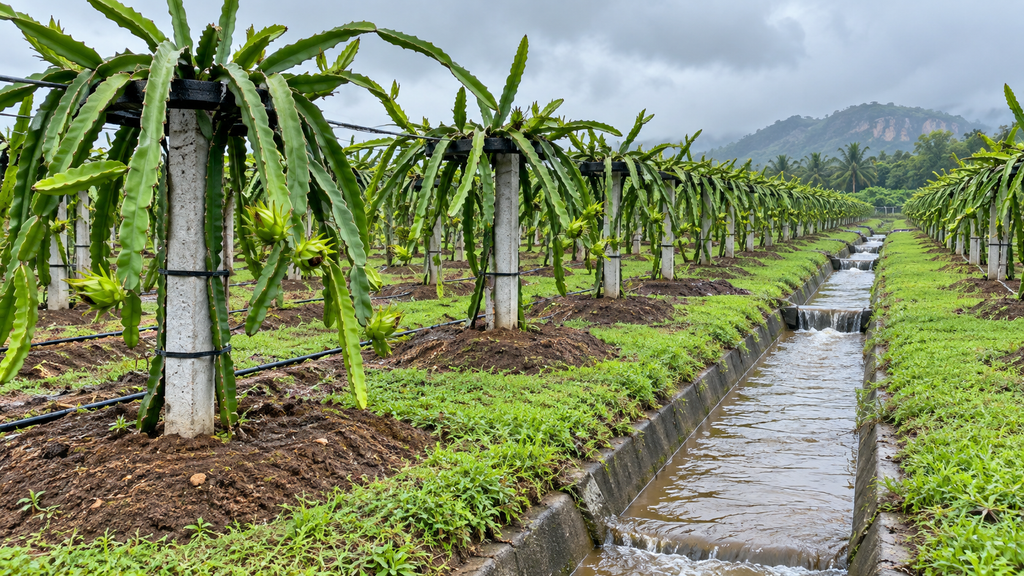
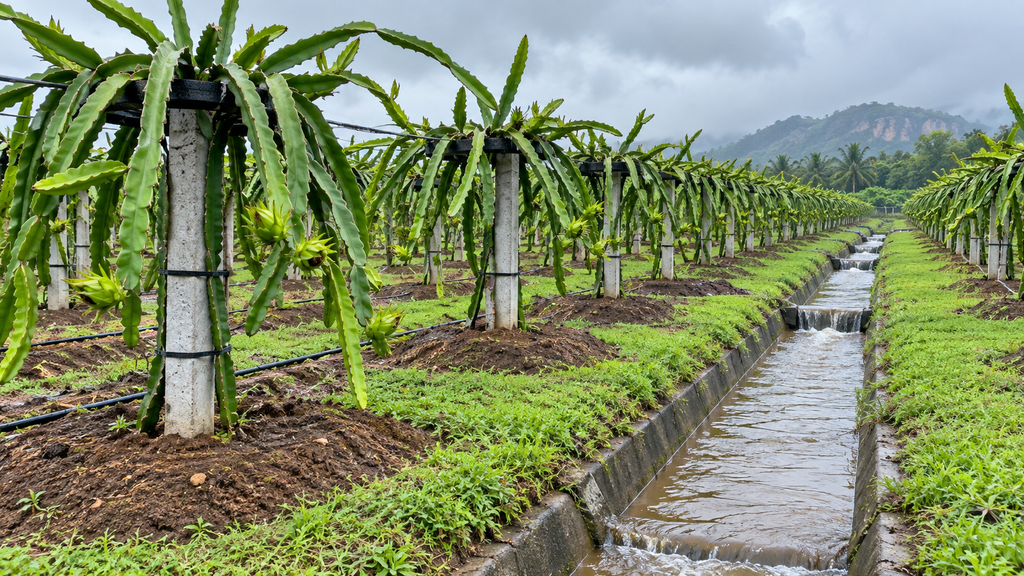
Clear drainage channels are a simple but essential defence against root-zone stress and stem-rot outbreaks.
- Clear drainage channels and remove standing water.
- Prune overcrowded and weak stems.
- Remove infected stems, fruit and fallen debris from the farm.
- Disinfect pruning tools between affected plants.
- Check every pole for soft rot, brown spots and mealybugs after heavy rain.
- Keep irrigation need-based; do not irrigate simply because it is scheduled.
- Record the affected plot, date, symptoms and weather conditions. This helps identify repeat problem areas.
When should you seek expert help?
Contact a horticulture officer, plant pathologist or KEFA technical resource person when:
- Rot is spreading quickly across multiple poles
- The same problem returns after every monsoon
- You are unsure whether the issue is fungal, bacterial, pest-related or nutritional
- Young plants are dying in patches
- Fruit symptoms are appearing close to harvest
Take clear photos of the full plant, close-up symptoms, roots if visible, and the surrounding drainage condition. This makes diagnosis much more accurate.
Frequently asked questions
What is the most common disease in dragon fruit?
Stem rot, anthracnose, brown spot and bacterial soft rot are important disease concerns. The risk depends on local weather, drainage, planting material and farm hygiene.
Why does dragon fruit stem rot during the rainy season?
Continuous moisture, poor drainage, wounds on stems and crowded growth create ideal conditions for rot-causing organisms to develop and spread.
Can a rotten dragon fruit stem recover?
It may recover only if the infected portion is identified early, removed correctly and the field conditions causing the problem are corrected. A fully soft or collapsing stem should not be left on the pole.
How can I prevent disease in dragon fruit naturally?
Start with healthy cuttings, good drainage, clean tools, timely pruning, removal of infected plant parts, regular scouting and balanced nutrition. These practices reduce the need for corrective sprays.
Is sunburn a disease in dragon fruit?
No. Sunburn is heat and light injury. However, damaged stem tissue can become more vulnerable to secondary infections, so it must be managed early.
Conclusion
The best disease-control programme begins before symptoms appear. A clean farm, healthy planting material, well-managed drainage and weekly inspection will protect the dragon-fruit crop far better than reacting after rot has spread. Farmers who identify the first affected stem and act quickly can prevent major losses during Karnataka’s rainy and hot seasons.
For technical training, farmer networking and support on exotic fruit cultivation, contact Karnataka Exotic Fruit Farmers Association (KEFA).