
- Your cart is empty Browse Shop
Exotic Fruit Farm Consultation in Karnataka: Complete Planning Guide
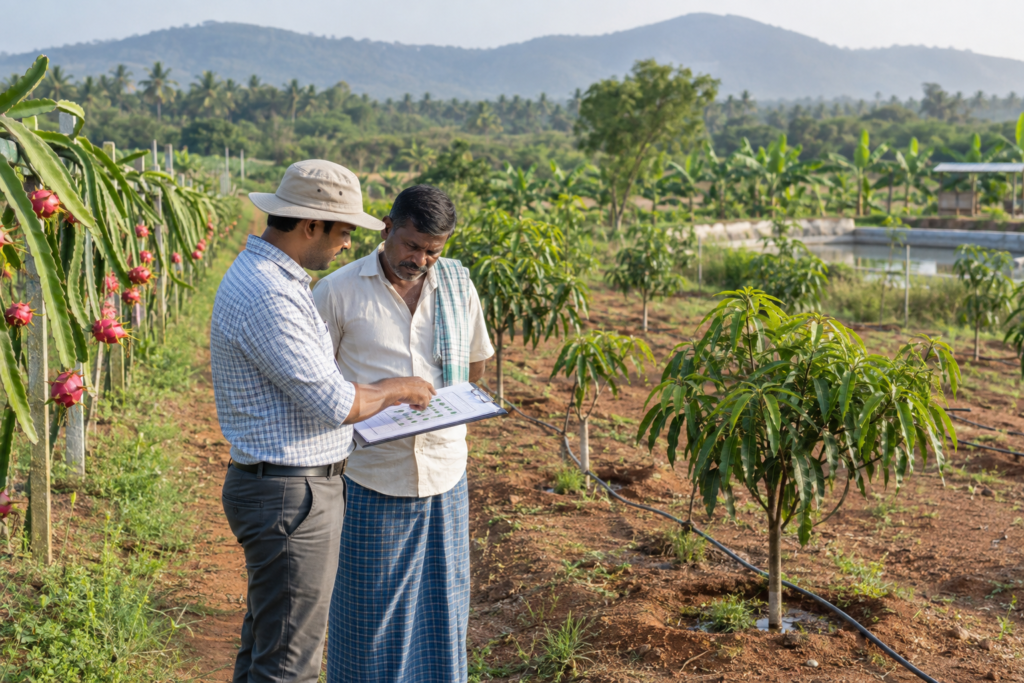
Exotic fruit farm consultation in Karnataka helps farmers evaluate a project before investing in planting material, irrigation, infrastructure and labour. Every farm has different soil, water, climate, access and market conditions. A crop that performs well in one district may not be commercially suitable in another location.
Karnataka Exotic Fruit Farmers Association (KEFA) supports growers through practical information, farmer networking, training and consultation. The purpose of consultation is to improve planning and reduce avoidable mistakes. It cannot guarantee yield, market price, subsidy approval, buyer commitment or profit.
Why Consult Before Starting an Exotic Fruit Farm?
Exotic fruit projects often involve unfamiliar varieties, costly planting material and crop-specific infrastructure. Farmers may receive conflicting information about expected yield, harvest period, market demand or buyback. A structured consultation helps separate farm facts from promotional claims.
The process should examine the land, water, crop choice, planting density, support system, labour, investment capacity, maintenance period and sales plan together. Selecting a crop only because its current retail price is high can create serious risk when commercial production begins.
Farm Location and Climate Assessment
District, elevation, temperature range, rainfall, humidity, wind and sunlight affect crop performance. Farms in Bengaluru Rural, Ramanagara, Kolar, Chikkaballapur, Tumakuru, Mysuru, coastal Karnataka and northern districts may require different crop and management decisions.
A consultant should review exposure to waterlogging, strong wind, frost pockets, summer heat and wildlife pressure. Nearby crops, roads, electricity, labour availability and travel time to markets should also form part of the assessment.
Soil and Water Review
Soil depth, drainage, texture, pH, salinity and organic matter influence root development and nutrition. Laboratory soil and irrigation-water tests provide a better basis for planning than visual observation alone. Test reports should be interpreted for the proposed crop.
Available water must be estimated for the full year, including peak summer. Check borewell or open-well reliability, storage, pump capacity, water quality and power supply. Drip irrigation, filtration and fertigation requirements should be planned before planting.
Selecting the Right Exotic Fruit Crop
Farmers may consider dragon fruit, avocado, passion fruit, fig, guava varieties, mulberry, rambutan, mangosteen and other speciality fruits. Crop selection must consider local suitability, gestation period, technical knowledge, availability of genuine planting material and realistic market access.
Begin with a manageable area when the crop or variety is new to the farm. A pilot plot provides practical information about establishment, pest pressure, labour and market acceptance before expansion. Review our guide to exotic fruit planting material in Karnataka before ordering plants.
Plantation Layout and Infrastructure
A farm layout should mark boundaries, roads, irrigation lines, drainage, water storage, power points, planting rows, windbreaks, work areas and future expansion. Row direction and spacing should support sunlight, movement, spraying, pruning and harvesting.
Dragon fruit requires a properly designed support system. Passion fruit needs trellising, while some tree crops require wider spacing or wind protection. Estimate infrastructure quantities from an accurate field layout instead of using a general per-acre assumption.
Planting Material and Supplier Verification
Confirm the crop, variety, propagation method, source and plant health before purchase. Ask for an invoice and retain supplier communication, photographs and transport records. Inspect material on arrival and report visible damage immediately.
A consultant can help prepare questions and specifications, but farmers should independently verify nurseries and suppliers. No responsible consultation should promise plant performance without considering variety identity, farm management and environmental conditions.
Cost and Implementation Planning
Prepare separate estimates for land preparation, plants, supports, irrigation, fencing, water storage, electricity, nutrition, crop protection, labour, transport and contingency. Include maintenance costs during the non-bearing period and avoid using only a first-year plantation figure.
Use multiple supplier quotations and record the assumptions behind each estimate. Phase the project when cash flow, water or labour is limited. Subsidy should be treated as possible support after approval and verification, not as confirmed funding. Read our government subsidy guide for dragon fruit farming.
Market Planning Before Planting
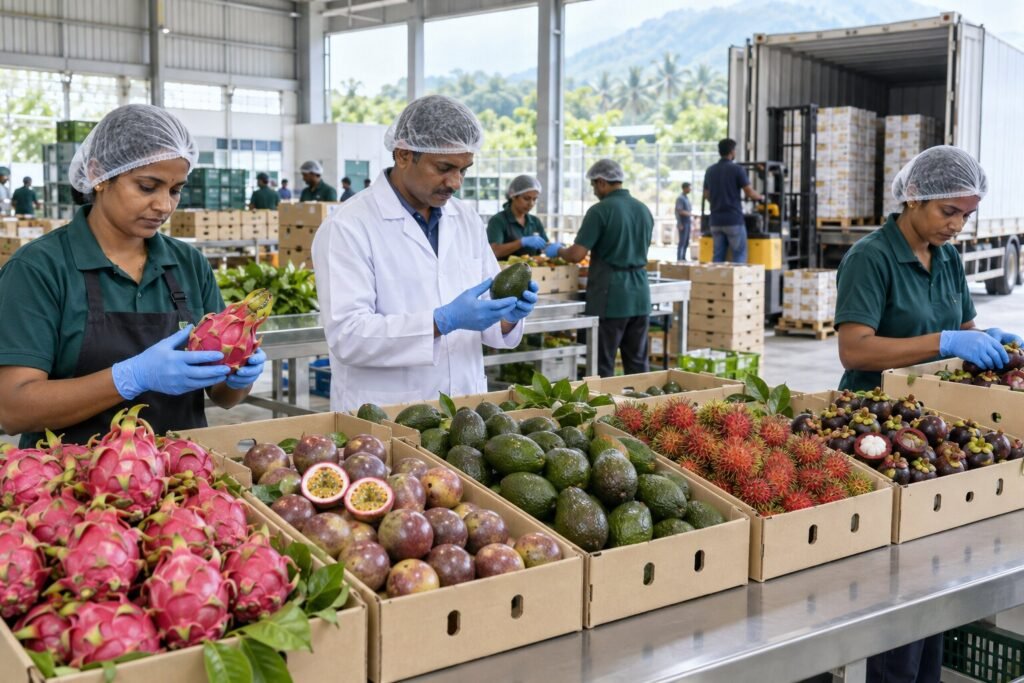
Identify possible wholesale markets, distributors, retailers, hotels, restaurants, processors and direct customers. Discuss expected quality, variety, grading, packing, volume and delivery arrangements. Market prices and buying terms change, so no single enquiry should be treated as a permanent market guarantee.
A mixed sales plan reduces dependence on one buyer. Farmers located near Bengaluru can review our dragon fruit market and buyers in Bengaluru article for market-readiness guidance.
What to Prepare for a KEFA Consultation
- Farm location and a map pin.
- Total area and proposed cultivation area.
- Recent farm photographs and videos.
- RTC or basic land details, without sharing unnecessary sensitive information.
- Soil and water test reports, if available.
- Water sources, storage and irrigation details.
- Crops or varieties being considered.
- Approximate investment capacity and intended planting schedule.
- Labour availability and previous farming experience.
- Expected market channel or business objective.
Possible Consultation Stages
- Initial discussion to understand the farmer’s objective.
- Review of farm information, photographs and test reports.
- Site visit where required and mutually agreed.
- Crop-suitability and infrastructure discussion.
- Indicative layout, implementation and market-readiness guidance.
- Follow-up review as the plantation progresses.
The scope, professional fee, travel, deliverables and timeline should be agreed before consultation begins. Recommendations may need revision when field conditions, budget, water, planting material or government rules change.
Warning Signs Farmers Should Avoid
- Guaranteed profit or fixed market-price claims.
- Assured government subsidy without departmental sanction.
- Compulsory purchase from an undisclosed nursery.
- Very high yield claims without farm records and assumptions.
- Pressure to plant a large area without a pilot or market plan.
- Buyback promises without written commercial terms.
Reference Video
For an overview of a digital farming-support ecosystem, watch KrishiVeda now available in Play Store on YouTube.
Frequently Asked Questions
Can KEFA recommend the best exotic fruit for my farm?
KEFA can help review available farm information and discuss suitable options. A responsible recommendation depends on location, soil, water, climate, budget, management capacity and market objectives.
Does consultation include a site visit?
A site visit may be included when required and mutually agreed. The scope, location, professional fee, travel and deliverables should be confirmed before the visit.
Does KEFA guarantee buyers, subsidy or farm profit?
No. KEFA supports information, planning and networking. Buyers make independent commercial decisions, government departments decide subsidy claims, and farm results depend on many factors.
Contact KEFA
Contact Karnataka Exotic Fruit Farmers Association for membership, training, farmer networking and exotic fruit farm consultation in Karnataka. Share the farm location, area, water availability, crops under consideration and planned timeline for a useful initial discussion.