
- Your cart is empty Browse Shop
Exotic Fruit Planting Material in Karnataka: Complete Farmer’s Guide
Successful exotic fruit farming begins with healthy and suitable planting material. Farmers searching for exotic fruit planting material in Karnataka should check the variety, source, plant health and suitability for their location before investing. A low-priced plant can become costly if it is weak, wrongly labelled or unsuitable for the farm’s soil and climate.
Karnataka Exotic Fruit Farmers Association (KEFA) supports farmers through practical information, networking and farm consultation. This guide explains how to select planting material for dragon fruit and other exotic fruit crops and how to prepare the farm before planting.
Why Planting Material Quality Matters
The quality of a plant affects establishment, growth, uniformity, disease risk and future yield. Healthy planting material should have a clear identity, a well-developed root system or mature cutting, and no visible signs of pests, rot or physical damage. Farmers should not select plants only by price or appearance.
Ask the supplier for the botanical or recognised variety name, propagation method, approximate plant age and available production history. Keep the invoice, supplier details and photographs of the material received. These records are useful if there is a variety or quality issue later.
Exotic Fruit Plants Suitable for Karnataka
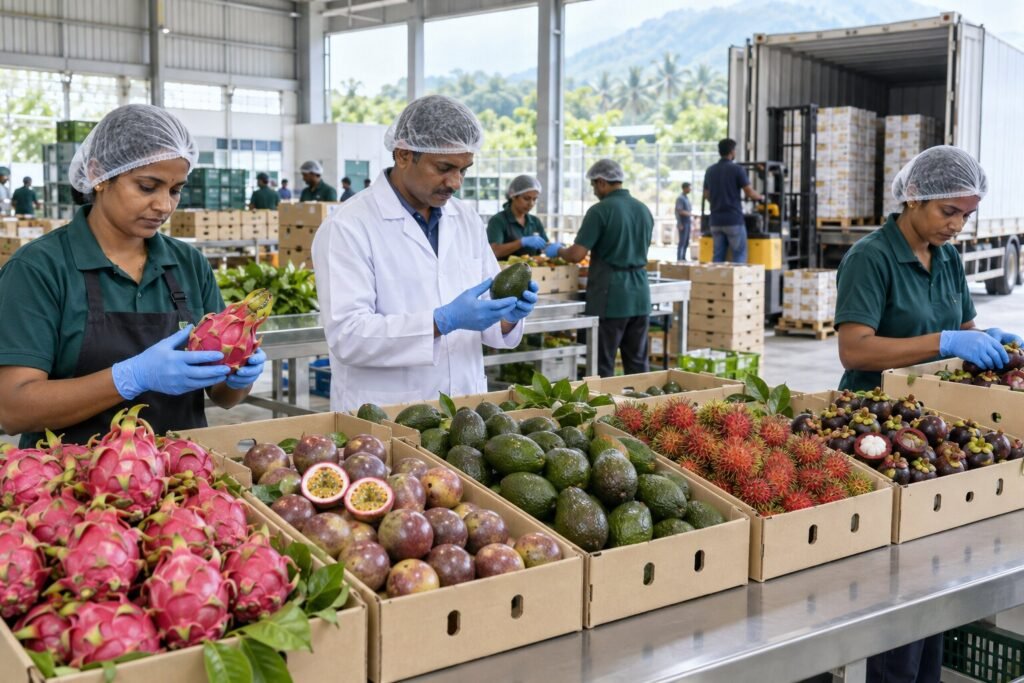
Different parts of Karnataka have different rainfall, temperature, elevation, soil and water conditions. Depending on the location and farm assessment, growers may explore dragon fruit, avocado, passion fruit, fig, guava varieties, mulberry, rambutan, mangosteen and other speciality fruit crops. Not every crop is suitable for every district.
Before ordering plants, evaluate local climate, drainage, irrigation water, wind exposure, labour availability, market access and the time required for commercial production. A crop should be selected only after considering both cultivation feasibility and market demand.
Dragon Fruit Planting Material in Karnataka
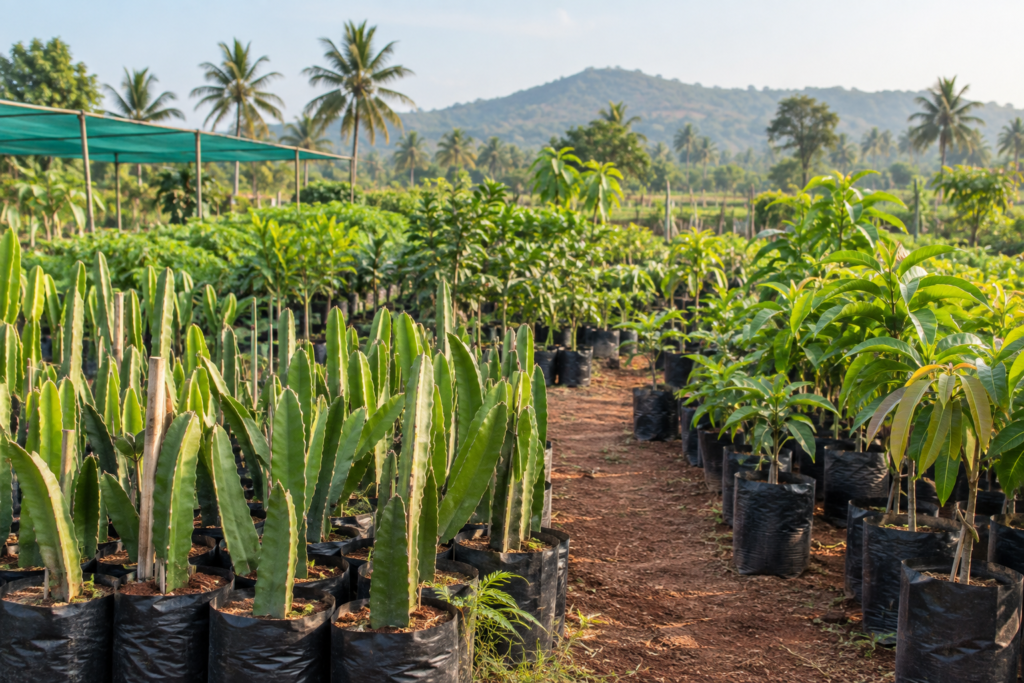
Dragon fruit is generally established using mature, healthy cuttings or rooted plants. Farmers should confirm the flesh colour and variety because market preference can differ. Select firm cuttings with no soft rot, deep wounds or severe pest damage. The mother plants should be healthy and productive.
Planting material is only one part of the investment. Dragon fruit also needs a suitable support system, drainage, irrigation, nutrition planning and regular canopy management. Read our dragon fruit market and buyers guide before finalising the plantation scale.
Checklist Before Buying Exotic Fruit Plants
- Confirm the crop, variety and expected fruit characteristics.
- Check whether the source nursery or propagator can provide an invoice.
- Inspect leaves, stems, roots and growing media for pests, disease and damage.
- Ask how the plant was propagated and whether it is hardened for field conditions.
- Confirm the recommended spacing, pollination needs and planting season.
- Understand replacement terms for damaged or incorrectly supplied plants.
- Plan safe transport so roots, cuttings and graft unions are protected.
How to Verify a Plant Nursery or Supplier
Visit the nursery when practical and observe the mother plants, propagation area and plant-health practices. Ask for recent photographs or videos when a physical visit is not possible. Compare information from more than one source, especially for new or expensive varieties.
Avoid relying only on social-media claims, unusually high yield promises or assured buyback statements. Ask for written details and independently verify any commercial commitment. KEFA may help farmers understand questions to ask, but farmers should complete their own supplier and transaction checks.
Transport and Planting Readiness
Coordinate dispatch so plants are not kept in closed or overheated vehicles for long periods. On arrival, inspect the consignment and record damage immediately. Keep plants in a protected area and follow suitable acclimatisation practices before field planting.
Prepare pits, supports, irrigation and drainage before the plants arrive. Confirm the correct planting depth and initial watering requirement for the crop. Newly planted material should be monitored closely for moisture stress, pest attack, sun injury and establishment failure.
Common Mistakes Farmers Should Avoid
- Buying an unknown variety without written identification.
- Ordering large quantities before testing a crop on the farm.
- Selecting a crop without checking local climate and market access.
- Accepting guaranteed-income or fixed-price claims without verification.
- Planting before irrigation, drainage and support systems are ready.
- Mixing varieties without proper labels and farm records.
Exotic Fruit Farm Consultation in Karnataka
A farm consultation can help a grower review the location, water source, soil, crop choice, layout, planting quantity, infrastructure and market approach. The final decision should be based on farm-specific conditions rather than a general online recommendation.
Farmers may contact KEFA for information about membership, training, networking and exotic fruit farm consultation in Karnataka. Share the farm location, total area, water availability, soil information, crops being considered and expected planting schedule when making an enquiry.
Frequently Asked Questions
Where can farmers buy exotic fruit planting material in Karnataka?
Planting material may be available from specialised nurseries, research-linked sources and experienced propagators. Availability changes by crop and season. Verify the variety, source, health and invoice before purchase.
How should a farmer select dragon fruit cuttings?
Choose mature and healthy cuttings from identified mother plants. Confirm the variety and flesh colour, and reject material showing soft rot, serious wounds or heavy pest damage.
Does KEFA sell or certify every plant supplied in Karnataka?
No. Farmers should verify the supplier and planting material independently. KEFA supports knowledge sharing, networking and consultation but does not guarantee every nursery, variety, plant performance, yield or commercial return.
Contact KEFA
Contact Karnataka Exotic Fruit Farmers Association for guidance on exotic fruit farming, planting readiness, farmer networking, training programmes and consultation in Karnataka.